There have been significant changes over the last 80 years on the Navajo Reservation. The Navajos used to depend on the horse and wagon for transportation. Now most of them have pickup trucks and paved roads, making it easier to get to nearby towns for shopping and the selling of rugs, jewelry, and sandpaintings. Modern transportation has certainly had an impact on the survival of many Navajo Trading posts. For the Navajos, the acquisition of a truck is often an extended family affair. Adult members of a family will pool their income in order to make the monthly payments. Truck payments are usually the largest singular household expense.
Housing has also changed. The majority of Navajos used to live in hogans, a six or eight-sided one room home for the entire family. Today most people build their own homes or live in government-subsidized housing.
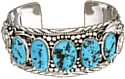
In addition to raising livestock, they now earn a living working for wages in industries developed on the reservation, such as forestry, mining, manufacturing, and construction, as well as government work and tourism. People also move off the reservation to work in nearby cities and towns. Another means of support is the creating of artwork such as rugs, jewelry, sandpaintings, pottery, and baskets. These activities are usually reservation based. The Navajo artist is tremendously talented in creating beautiful jewelry pieces.
Posted: 2006-07-14