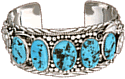
Of all the southwestern tribes, the Navajos endow turquoise with the highest social, economic, and religious importance. Turquoise is the most important ornamental stone in ceremonials, and it is often referred to in Navajo myths and tales. The turquoise of today comes not only from the mines of the Southwest but also from Australia, China, Chile, Mexico, Persia, and Tibet.
Materials, methods, and styles in Navajo Jewelry making have changed in many ways in the last hundred years. While early jewelers used silver exclusive, Navajo Jewelry making evolved to include turquoise and coral, and then a magnificent array of stones, shells, and gems. The wide use of materials of today include azurite, charoite, angel coral, oxblood coral, salmon coral, diamonds, dolomite, emeralds, fossilized ivory, gold, ironwood, jet, lapis lazuli, malachite, onyx, Australian white and black opal, spiny oyster shell, and sugilite. In technique there is more innovation, originality, and quality in workmanship, with a finesse of design and symmetry. Much of the work falls in the category of contemporary, and yet a number of the artists who make this kind of jewelry maintain the inspiration of its tradition.
Posted: 2006-07-14